
The Fox Cities Chamber is proud to present the AI Business Summit, the premier event for businesses, innovators, and professionals looking to explore the power of artificial intelligence in the workplace. This one-day event brings together industry experts, thought leaders, and cutting-edge businesses to discuss practical AI applications, emerging trends, and real-world case studies that are shaping the future of business.

She’s back. Economist and top-50 professional futurist Rebecca Ryan returns to the AI Summit to kick us off. The truth? Everyone’s tired of AI hype. Rebecca is, too. She cuts through the AI noise and brings fresh insight with that practical, Wisconsin-wise business sense. This year, she’ll share her take on:
Rebecca Ryan, NEXT Generation Consulting, Inc.
Rebecca Ryan is a noted top 50 professional futurist, economist, best-selling author and entrepreneur. She is the founder of NEXT Generation Consulting through which she partners with government leaders across the country. Looking a generation ahead, she outlines strategies in urban planning, economic development and workforce development to ensure communities are well equipped for future trends and challenges. Rebecca is a graduate of Drake University with a certificate in Strategic Foresight from University of Houston; she is the Resident Futurist at the Alliance for Innovation and on the Executive Committee of the global Association of Professional Futurists.

Most AI sessions focus on tools, automation, or high‑level strategy. This session takes a different approach—showing how generative AI strengthens Continuous Improvement itself. Through real‑world CI examples, attendees will see how AI can improve how we facilitate working sessions, design more effective meetings, clarify decisions, and accelerate follow‑through—not just capture notes and action items. Learn how AI supports stronger problem definition, better meeting/event preparation, faster PDCA cycles, and clearer follow-ups, while keeping humans firmly responsible for judgment and outcomes. Ideal for leaders and CI practitioners who want AI embedded into daily operational rhythms—not bolted on as another initiative.
Troy Beyer, Galloway Company
Troy Beyer is the Senior Director of Process Improvement at Galloway Company, where he leads strategy, safety, project management, continuous improvement, and the practical adoption of AI across the organization. With deep experience in Lean, CI operating models, and operational leadership, Troy focuses on embedding improvement thinking into daily work—not just tools or initiatives. He is known for translating emerging technologies like generative AI into practical, repeatable behaviors that improve how teams problem-solve, collaborate, and execute. Troy brings a hands‑on, operator‑involved approach to making AI useful on the front lines of the business.
As a futurist and economist who’s tracked hundreds of AI-related signals and projects across dozens of organizations, Rebecca Ryan has a birds-eye view of what works and what wastes money. Plus, her team has been running AI pilots since 2023. In this workshop, she’ll share the patterns she’s observed, the questions mid-sized businesses should ask before spending a dime, and the framework for deciding what to automate and what to keep human. There will be lots of time for Q&A and you’ll leave with a practical roadmap from a Wisconsin-based futurist and business owner.
Rebecca Ryan, NEXT Generation Consulting, Inc.
Rebecca Ryan is a noted top 50 professional futurist, economist, best-selling author and entrepreneur. She is the founder of NEXT Generation Consulting through which she partners with government leaders across the country. Looking a generation ahead, she outlines strategies in urban planning, economic development and workforce development to ensure communities are well equipped for future trends and challenges. Rebecca is a graduate of Drake University with a certificate in Strategic Foresight from University of Houston; she is the Resident Futurist at the Alliance for Innovation and on the Executive Committee of the global Association of Professional Futurists.

“AI” can sometimes feel like a magical problem solver until it’s time to build something for real. At that point, the ability to confidently choose the right tool for the job, and quickly, can make or break a project. To make the right choice, you should know a little bit about how each one works.
Emmett will illustrate the difference between traditional machine learning and large language models: where each one shines, where each one predictably breaks down, and how to know which tool a given problem calls for. The session will also dig into autonomous agents, what separates well-built automated systems from fragile ones, and which tools belong in the mix when the stakes are real. Using that same framework, the session will close with a few predictions on which AI applications are likely to stand the test of time, and which might fall apart along the way.
By the end, attendees will have the technical literacy to evaluate AI tools on their merits, a practical framework for building sound automated systems, and a clear-eyed view of what’s likely hype and what’s likely durable.
Emmett Gordon – Senior Manager of Data Science, Jewelers Mutual
Emmett is a Senior Manager of Data Science at Jewelers Mutual. His work centers on scaling machine learning from prototype to production — building the infrastructure, governance, and organizational alignment needed to make AI a durable enterprise capability rather than a collection of one-off experiments. At JM, Emmett’s team owns the full ML lifecycle in Databricks, spanning data ingestion, model development, deployment, and monitoring. The team’s mission is to apply AI and ML where decades of institutional knowledge are richest, freeing experienced people to direct their attention toward the complex, the novel, and the horizon. Emmett studied Sociology at UW–Madison. This background continues to inform how he thinks about the organizational dynamics, decision-making structures, and human factors that ultimately determine whether AI initiatives succeed or fail. He is an active voice in the Fox Valley business community on the intersection of practical AI adoption and organizational readiness.


Blue Door has taken a collaborative approach to AI adoption shaped by its own internal experience. They implemented AI across its own team—testing tools, redesigning workflows, and navigating adoption challenges firsthand. Those lessons became the catalyst for a cohort-based model designed specifically for small businesses.
Rather than tackling AI one business at a time, AI Together brings similarly sized businesses—or those within the same industry—into a facilitated cohort. Working from a proven playbook, participants identify practical AI tools they can implement in parallel, reducing cost, lowering adoption risk, and learning from one another along the way. The cohort also reviews AI governance, data security, and privacy considerations to ensure adoption is responsible, transparent, and aligned with business and customer trust.
Designed for small businesses with intermediate AI knowledge, this session shares the research, framework, and lessons learned that will guide a pilot cohort—offering a realistic, people-first path from AI experimentation to everyday business value.
Heidi Strand – Co-owner and Co-founder, Blue Door Consulting
Heidi Strand has spent the past 23 years as a marketing consultant and business leader helping clients grow as the Co-founder of Blue Door Consulting. Strand jointly oversees a team of nearly 50 marketing and technology professionals armed with data and dedicated to driving sales for more than 600 current clients across the United States and internationally. From local retailers to global manufacturers, her expertise in integrated marketing strategy, brand development, website architecture and customer experience design, has helped businesses use marketing as a growth driver. With a passion for strategy and technology, she has been asked to speak and consult on a wide variety of topics including marketing discipline, brand and culture, technology integrations and team leadership. Blue Door Consulting has been a three-time recipient of Inc. 5000’s fastest-growing private companies and recognized for its client work with years of Communicator Awards. Regional recognition also includes the Small Business of the Year and the Fox Cities Company Innovation Award. Personally, Strand has been commended for her community engagement and has been involved with several non-profit boards of directors.
Andy Wojtowski – AI Solutions Consultant, Blue Door Consulting
Andy Wojtowski is an AI Solutions Consultant at Blue Door Consulting in Oshkosh, Wisconsin. He helps businesses move beyond AI curiosity and into practical, responsible implementation. His work focuses on AI strategy, governance, workflow design, prompting frameworks, and team-based adoption. At Blue Door Consulting, Andy partners with leaders and teams to identify where AI can create real value, reduce friction, and support better business outcomes. He leads cohort-style AI programs that bring organizations together around shared governance models, collective workflow mapping, and hands-on experimentation. His approach helps teams build confidence, align on responsible use, and turn scattered AI efforts into repeatable practices. Before moving into AI consulting, Andy spent more than two decades in digital strategy, user experience, web development, and marketing technology. That background shapes his practical view of AI: the best solutions are not just technically interesting, they are useful, usable, and aligned with how people actually work.


AI is embedded in processes throughout your organization, from marketing to human resources to operations and part of everyday business workflows. The question is no longer whether your organization is using AI, it’s whether you’ve implemented the right guardrails to mitigate the risks that come with it. During this presentation, our presenters will walk through common, day-to-day uses of AI within organizations and explain the potential legal and operational risks you may already be exposed to – often without realizing it:
This session focuses on practical, proactive guardrails, including structured review processes, clear disclosure standards, vendor and contractual protections, data governance and cybersecurity controls, and a documented, enterprise-wide AI policy. AI can drive efficiency and innovation but only when supported by intentional governance. The right guardrails don’t slow innovation; they protect it.
Mike Bendel, Intellectual Property Attorney at Amundsen
Mike Bendel is an intellectual property attorney who helps clients protect and leverage their innovations. He provides strategic counseling on patents, trademarks, copyrights, and trade secrets, with a growing emphasis on the legal implications of artificial intelligence, including IP ownership rights for AI generated content. He also helps his clients develop and implement policies to mitigate risks related to AI’s use of data.
Craig Kubiak, Labor & Employment Attorney at Amundsen Davis
Craig Kubiak is an experienced Labor and Employment attorney and litigator who advises employers on compliance with workplace laws and defends them in complex disputes. He helps clients navigate the evolving legal landscape around artificial intelligence in hiring, ensuring that automated tools comply with anti-discrimination laws and promote fair, lawful employment practices.
Tiffany Woelfel, Business Litigation Attorney at Amundsen Davis
Tiffany Woelfel is a seasoned litigator with extensive experience in intellectual property and employment law. She advises and represents clients on disputes involving IP ownership, often in the context of AI-driven work and employee-created innovations. She helps businesses navigate complex issues around authorship, trade secrets, and emerging technologies in the workplace.

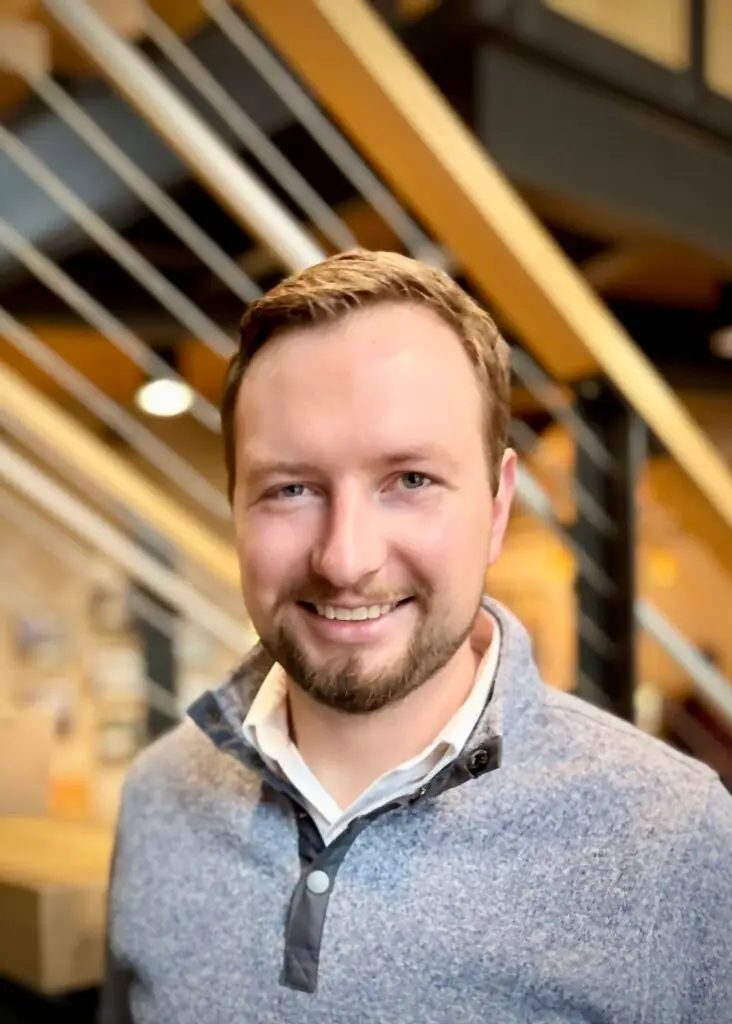
Credit and Rebill (CR/RB) requests are a common but costly operational challenge in large enterprises—often submitted through fragmented channels, researched manually, and processed reactively with little visibility or data capture. In this session, the speakers will share a real-world case study of how multiple teams came together to solve this problem end-to-end.
No single function could have delivered this solution alone. While AI and automation played a critical role, human expertise, judgment, and collaboration were equally essential to designing guardrails, validating logic, and ensuring the solution worked in practice—not just in theory. Attendees will see how they combined front-end validation, Python-based eligibility logic, and centralized intake and tracking with strong human-in-the-loop design to eliminate unnecessary research, reduce follow-ups, and create a true single source of truth.
Rather than focusing on theory, this session emphasizes practical application: how to identify high-friction processes, where AI and automation create immediate value, and why the human element is critical for adoption, trust, and long-term sustainability. The result is measurable time savings, improved data quality, and the ability to shift from reactive processing to proactive, preventative insights.
Melissa Wege – Senior Finance Operations Manager & Citizen Developer at U.S. Venture, Inc.
Melissa Wege is a Finance Operations Manager at U.S. Venture, Inc., headquartered in Appleton, WI. In her role, Melissa is a driving force behind optimizing financial processes, enhancing operational efficiency, and collaborating across the organization to streamline end-to-end processes. Melissa is also a Citizen Developer and is dedicated to “Finding a Better Way” by leveraging Microsoft Power Platform tools to implement innovative solutions that transcend finance and benefit the entire organization. She is passionate about mentoring and empowering others, whether it’s guiding the next generation of finance and citizen development professionals or supporting her “Little” through her involvement with Big Brothers Big Sisters of East Central Wisconsin. Melissa values staying engaged with her community and is a recent graduate of the 2024-25 Leadership Fox Cities program through the Fox Cities Chamber of Commerce.
Josh Rapavi – Data and Analytics Manager, U.S. Venture, Inc.
Josh Rapavi is a Data & Analytics Manager at U.S. Venture, Inc., where he leads advanced modeling, analytics, and enterprise automation initiatives that bridge finance, operations, and technology. With nearly a decade of experience across audit, treasury, and financial analysis, Josh brings deep process knowledge to his work designing AI-enabled, human-in-the-loop solutions that improve decision quality and reduce manual effort at scale. A passionate advocate for enablement, Josh focuses on empowering others to build and adopt analytic and automation capabilities. He leads an internal Python cohort that has upskilled dozens of business-embedded developers and eliminated multiple full-time equivalents of manual work through automation. Josh is driven by the belief that the most impactful AI solutions are built through cross-functional collaboration—combining technical rigor, business context, and human judgment.

The most meaningful AI gains in small business usually do not start with a large-scale strategy or formal company initiative. They start with one owner, manager, or employee who begins using AI in practical ways to save time, improve work quality, and solve everyday business problems. When one person builds real AI fluency in their daily work, that capability can quickly extend into customer service, marketing, operations, communication, and decision-making across the business. This session provides a practical, personal roadmap for building useful AI skills without hype or technical complexity. Using a prompting framework and a structured 10-week adoption plan, participants will see how small, consistent habits with AI tools can lead to meaningful gains for both the individual and the small business. Whether you are new to AI or still in the occasional experiment stage, you will leave with a clear path forward.
John Muraski – Director, Center for Entrepreneurship and Economic Development, UW Oshkosh
Dr. John M. Muraski is a technologist, researcher, and educator dedicated to helping organizations thrive in a rapidly changing landscape. He is a Teaching Assistant Professor of Information Systems at UW Oshkosh, where he also leads the Small Business AI Clinic and the Center for Entrepreneurship and Economic Development. His research centers on technology education pathways, AI in instruction, and socio-technical integration of technology in organizations. With 20 years of industry experience before joining academia and a mission to engage, educate, and enable, he specializes in empowering others to harness technology as a practical tool to solve complex problems.
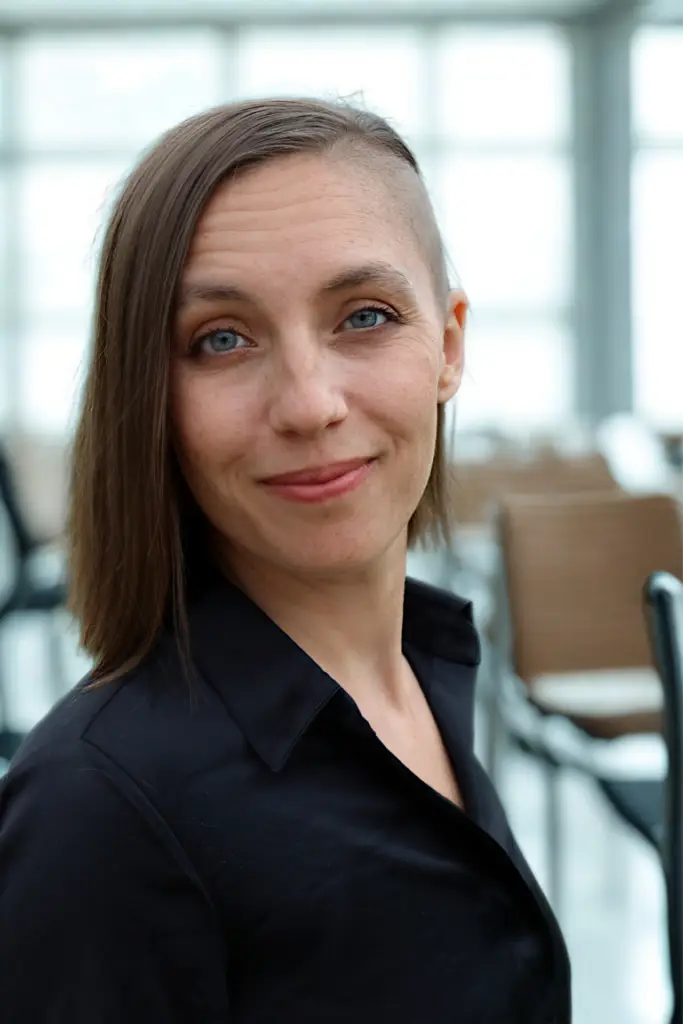
The greatest risk to any AI initiative, whether you are rolling out an enterprise tool like Copilot or Gemini, or launching a tailor-made AI solution, is not a technical failure; it is a human one. Organizations are investing significantly in AI, but many struggle to see a tangible return because the technical go-live is often met with user resistance or inconsistent engagement. Drawing on a real-world case study of a Microsoft Copilot rollout for 5,000 employees, this session provides a practitioner’s blueprint for moving beyond the deployment phase to achieve actual ROI realization. Amanda will break down a three-step framework:
Participants will learn how to identify the adoption triggers that drive long-term retention and avoid the common training mistakes that lead to underutilized technology. Whether you are building custom AI tools or purchasing enterprise solutions, you will leave with a scalable strategy to ensure your organization does not just launch AI, but actually profits from it.
Amanda Van Den Elzen – Founder & Facilitator, BetterWork Training
Amanda Van Den Elzen is the founder of BetterWork Training, a professional development consultancy helping non-technical professionals and teams get real, practical value from the AI tools they’re already licensing. Amanda specializes in translating complex technology into role-specific skills that stick. She cuts through the hype to focus on what actually changes how people work. With over six years of experience in workforce development and instructional design, she has trained professionals across industries through corporate workshops, industry events, and online partnerships reaching audiences of over a million. She is the creator of the AI Adoption Audit and ROI Recovery framework, a structured methodology that moves her clients’ workforces from AI confusion to confident, consistent adoption. Amanda is on a mission to close the AI literacy gap in the Midwest, ensuring that non-technical white-collar workers aren’t left behind as workplaces evolve. She’s proud to return to the Fox Cities AI Summit stage for the second year because she believes the future of work isn’t built in boardrooms or IT departments; it’s built one skilled, confident person at a time.

Everyone’s talking about AI chatbots and copilots — but the next wave is already here. Agentic AI systems can research, decide, and act on behalf of your business with minimal human oversight. This session cuts through the hype to show what agentic systems actually look like in practice today, drawing from real implementations in manufacturing, telecommunications, and professional services. Attendees will see live examples of AI agents handling multi-step business workflows, learn the practical difference between a chatbot and an autonomous agent, and walk away with a clear-eyed view of what’s ready for deployment now, what’s coming in 12-18 months, and where the hype still outpaces reality.
Caleb Waack – Founder & CEO, Heimdall Analytics
Caleb Waack is the founder of Heimdall Analytics, an AI consulting firm that bridges the gap between AI strategy and operational excellence. He works with enterprise clients and startups across Wisconsin, Phoenix, and Silicon Valley, embedding directly into leadership teams across food and beverage manufacturing, telecommunications, and technology to turn AI strategy into operational results. With a background in mechanical engineering and a Master’s in Data Science and AI, Caleb brings a systems-level perspective to advisory work. His engagements span agentic workflow development, AI literacy programs, enterprise platform builds, and data infrastructure modernization. As a founder himself, he brings firsthand experience building from zero, giving him a unique lens on the strategic and operational challenges his clients face at every stage of growth. Caleb helps business leaders cut through the hype and build practical, scalable AI programs that stick. He developed the Gen 1/2/3 framework, a practical model for gauging the maturity of AI products and workflows, to give organizations a clear-eyed view of where they are and a roadmap for where to go. He believes the gap between AI strategy and real-world impact isn’t a technology problem. It’s an execution problem.
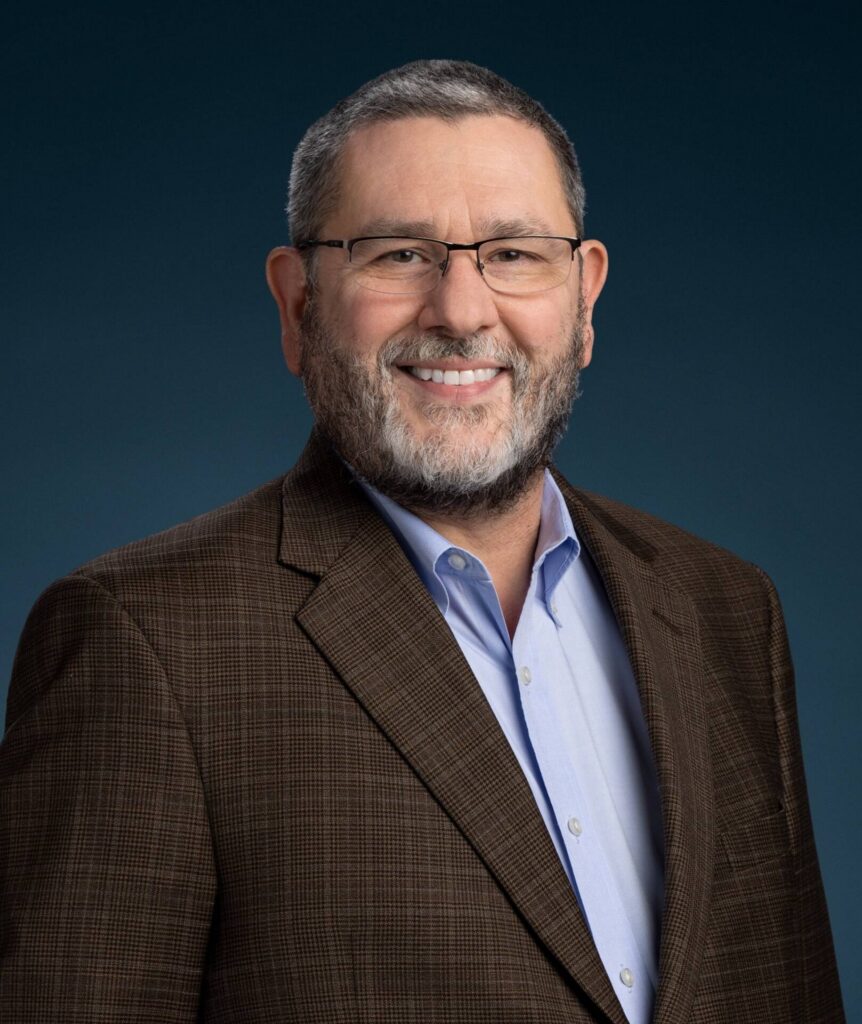
The gap between learning about AI and using it effectively is where many organizations stall. Pete will focus on key takeaways from the summit, practical ways to apply what you’ve learned within your organization, and a forward-looking perspective on where AI is headed next. You will walk away with a clear view of AI’s direction, a grounded sense of your organization’s standing, and practical steps to move from insight to action.
Pete Dulcamara – Founder, Pete Dulcamara & Associates, LLC
Pete Dulcamara is the author of “High-Tech Heroes: Why Gen Z Is Our Last and Best Chance to Save the Planet” and founder of Pete Dulcamara & Associates, where he helps organizations turn innovation into meaningful impact. His work is grounded in humanity-centric innovation, a philosophy focused on solving the world’s biggest challenges in ways that are both economically viable and scalable. Prior to launching his firm, Pete spent over three decades in global R&D leadership, including serving as Chief Scientist and Vice President of Corporate Research & Engineering at Kimberly-Clark. There, he led the discovery, development, and global deployment of science and technology across businesses, brands, and regions. Earlier in his career, he held senior leadership roles at The Dow Chemical Company across research, new ventures, sustainability, and technology commercialization. Pete remains deeply engaged in shaping the future of innovation. He serves on the Executive Advisory Board for the Stanford High Impact Technology Fund, the Board of Directors for Bassett Mechanical, and the Fox Cities Chamber of Commerce, where he also chairs the AI Task Force. A sought-after keynote speaker, Pete is known for making complex ideas clear, practical, and actionable.